Knoxville's History: East Tennessee's Heartbeat
Travel, Local History, East Tennessee
The History of Knoxville: How East Tennessee’s Heartbeat Was Built
Tucked along the Tennessee River and framed by the Smoky Mountains, Knoxville has grown from a scrappy frontier town into a modern Southern city with a rhythm all its own. To understand East Tennessee’s heartbeat today, you have to trace how Knoxville’s story unfolded—through rivers and rails, mills and music, struggle and reinvention.
From Cherokee Homeland to Frontier Capital
Long before Knoxville appeared on a map, the land along the Tennessee River was home to Cherokee communities who fished its waters, farmed its fertile soil, and followed ancient trading paths that cut through the hills. This landscape—rolling ridges, deep valleys, and winding waterways—would later define how the city grew and connected to the wider world.
In 1791, a small fortified settlement called White’s Fort became the foundation for Knoxville. Just one year later, it was chosen as the capital of the Southwest Territory, the frontier region that would eventually become Tennessee. Named for Revolutionary War hero Henry Knox, Knoxville quickly turned into a political and trading hub, even though it was still very much a rugged outpost separated from the East Coast by the Appalachian Mountains.
Rivers, Rails, and the Making of a Market Town
Knoxville’s early lifeline was the Tennessee River. Flatboats and later steamboats carried goods and people, turning the town into a gateway between the Appalachian backcountry and larger markets downriver. Farmers brought in corn, livestock, and timber; merchants shipped out flour, iron, and other raw materials. The river was more than scenery—it was the city’s first economic engine and the steady pulse of daily life.
The arrival of the railroad in the 1850s changed everything. Tracks linked Knoxville to cities like Chattanooga, Bristol, and beyond, opening the door to new industries and new residents. Suddenly, East Tennessee’s hills were not an obstacle but an asset, rich with coal, marble, and timber that could be moved by train. Knoxville grew into a bustling market town where railroads crossed, warehouses filled, and storefronts multiplied along Gay Street and Market Square.
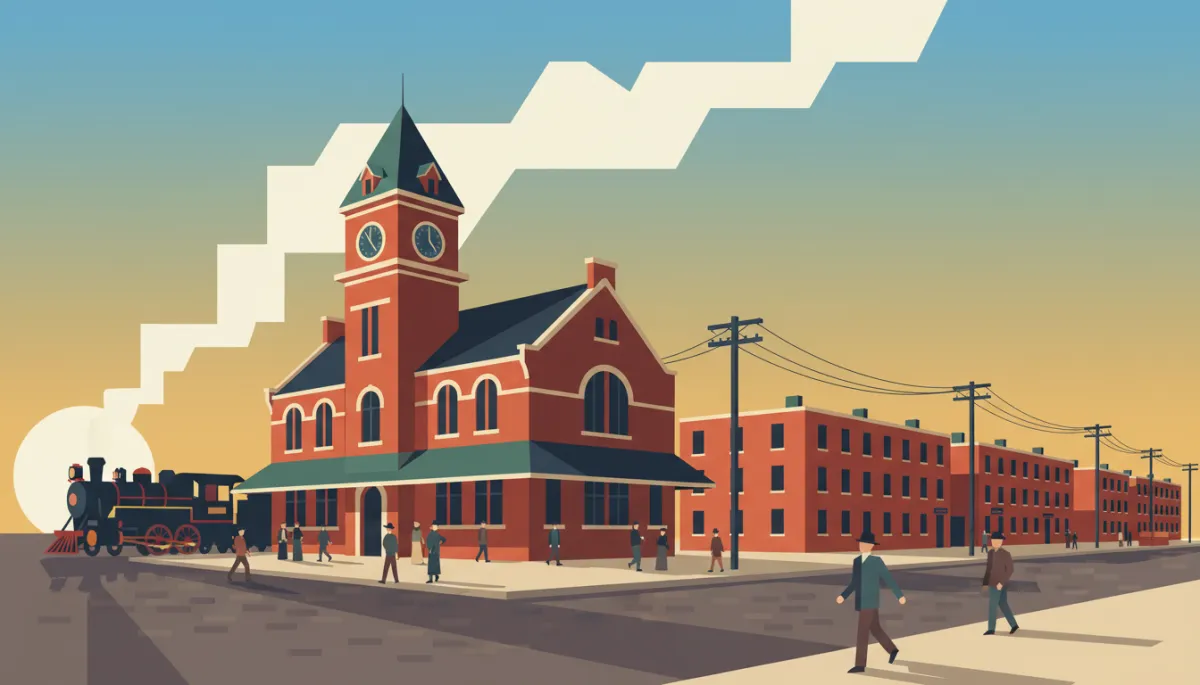
Rail lines turned Knoxville into a crossroads for trade, travel, and new ideas.
Civil War Fault Lines and a Divided City
When the Civil War reached East Tennessee, Knoxville found itself painfully split. Many residents opposed secession and supported the Union, while others backed the Confederacy. The city changed hands more than once, and the surrounding hills became the site of forts, skirmishes, and hardship for families on both sides. The Battle of Fort Sanders in 1863 cemented Union control, but the scars—economic, social, and emotional—lingered long after the last shots were fired.
Yet even in this fractured period, the foundations of Knoxville’s resilience were being laid. Neighbors had to find ways to live side by side again, to rebuild businesses, and to imagine a shared future. That capacity to bend without breaking would become one of the defining traits of East Tennessee’s heartbeat.
Industry, Immigrants, and the Smoky Mountain Gateway
After the war, Knoxville surged into the late 19th and early 20th centuries as an industrial city. Brick factories, textile mills, and iron works hummed along the rail lines. Local marble—known as “Tennessee marble”—was shipped nationwide and used in landmark buildings from New York to Washington, D.C. Newcomers arrived from across the region and from overseas, bringing their skills, traditions, and languages to East Tennessee streets and churches.
Knoxville also became a natural entry point to the Great Smoky Mountains. As automobiles became more common and the national park was established in the 1930s, visitors passed through the city on their way to the ridgelines and hollows beyond. Tourism layered onto industry, adding another beat to the city’s growing rhythm: hotels, diners, and roadside attractions that catered to travelers chasing mountain views and fresh air.
💡 Did you know? The Tennessee Valley Authority, created during the New Deal, reshaped rivers across the region and brought electricity to rural East Tennessee, tying Knoxville even more closely to the life of surrounding communities.
The University, the Sunsphere, and a Changing Downtown
One of Knoxville’s most enduring engines has been education. The University of Tennessee, which traces its roots back to the 1790s, grew into a major public university whose students and faculty continue to fuel the city’s energy. Game days, research labs, and campus events spill into local businesses, creating a constant flow of ideas and activity between “the Hill” and the rest of town.
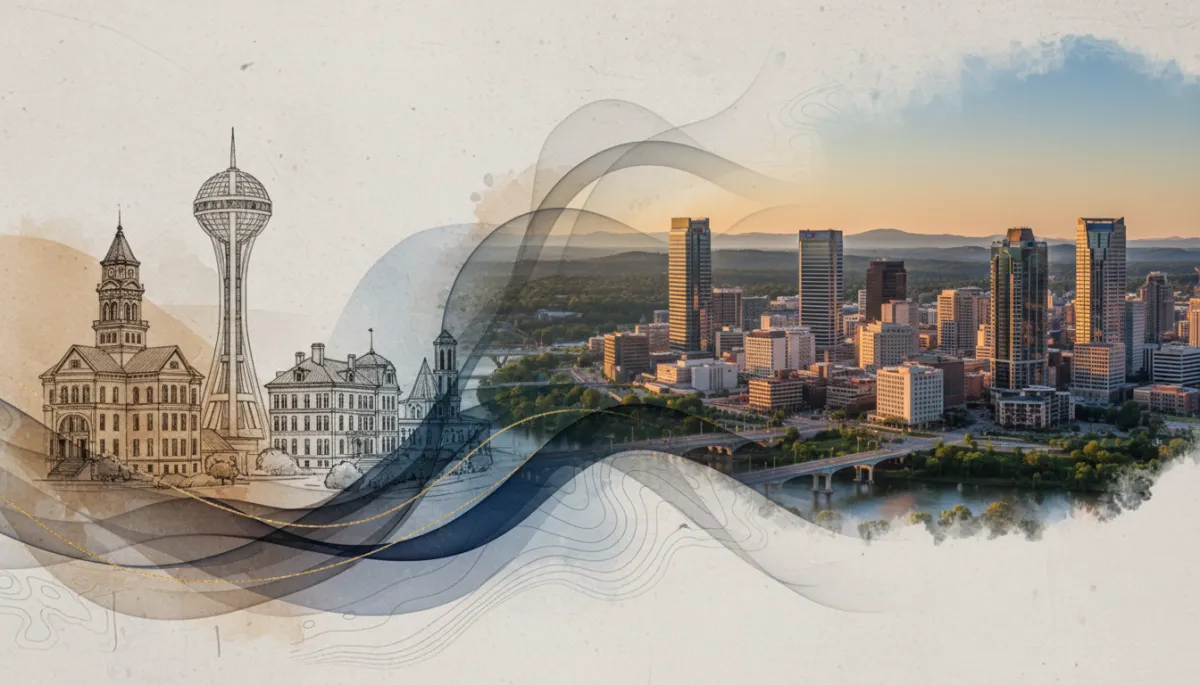
Knoxville’s skyline changed dramatically in 1982, when the city hosted the World’s Fair. The Sunsphere—a gleaming, gold-tinted tower—rose above the fairgrounds as a symbol of optimism and innovation. While the fair itself lasted only six months, it left behind a transformed section of downtown and a landmark that still catches the light over the Tennessee River. For many locals, the Sunsphere represents Knoxville’s willingness to dream bigger than its size might suggest.
How East Tennessee’s Heartbeat Was Built
So what, exactly, gives Knoxville and East Tennessee their distinctive heartbeat? It’s not just one industry, landmark, or moment in time. It’s the layering of many influences: the river that first carried goods and stories; the rails that brought opportunity and diversity; the factories and farms that shaped workdays; the university that nurtured ideas; the mountains that drew visitors and inspired music, art, and folklore.
It’s also the people—Cherokee communities, early settlers, freedmen after the Civil War, immigrant craftsmen, students, and families who chose to stay. Each wave added its own rhythm: church choirs and bluegrass bands, factory whistles and train horns, the roar of Neyland Stadium on a fall Saturday, the quiet slap of paddles on the Tennessee River at sunrise. Over time, those sounds blended into the steady, familiar pulse locals feel when they walk Market Square, drive Chapman Highway, or watch the sun drop behind the Smokies.
Knoxville Today: A City Still in Motion
Today, Knoxville is a mix of restored brick warehouses, new riverfront developments, local restaurants, music venues, and neighborhood parks. The city leans into its past without being trapped by it. You can tour historic homes, then catch a concert at the Tennessee Theatre; stroll past century‑old churches, then grab coffee in a former factory turned creative space. The same forces that built East Tennessee’s heartbeat—resilience, connection to the land, and a knack for reinvention—still guide how the city grows and welcomes newcomers.
Whether you’re a lifelong local or a first‑time visitor, understanding the history of Knoxville adds depth to every view of the river, every brick façade, and every mountain silhouette on the horizon. This is a city that has weathered division, embraced change, and quietly built a heartbeat that keeps East Tennessee moving forward—one story, one street, and one generation at a time.
